Insight
Is PR still relevant in the social media and AI era?
Short answer: yes — more than ever. Here's the honest version, including the part most agencies leave out.
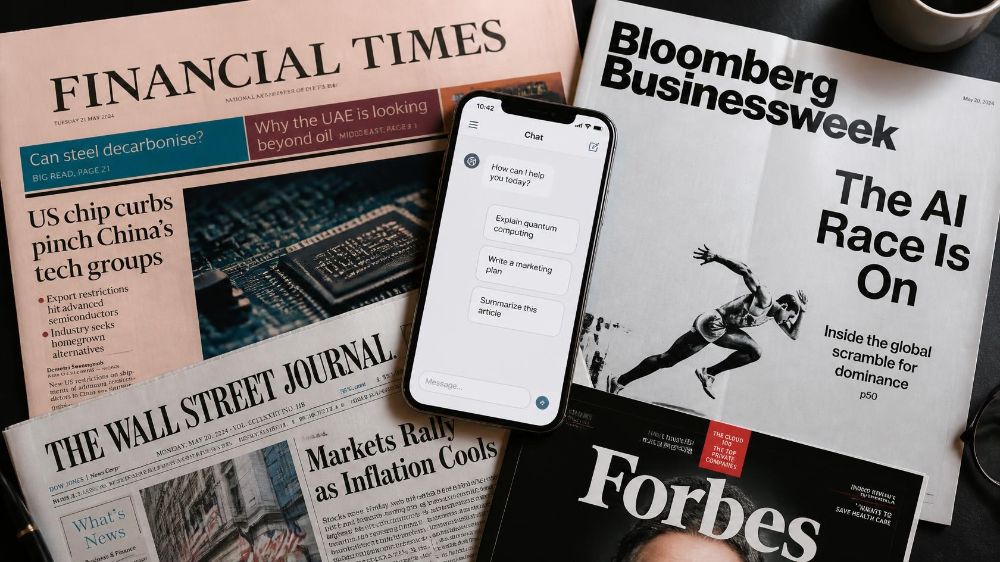
Every few years someone declares PR dead. First it was social media. Now it's AI. Both times, the opposite happened — the noisier the internet gets, the more a credible third party vouching for you is worth.
Why the noise makes PR matter more, not less
AI can write a thousand LinkedIn posts before lunch. None of them mean anything, because anyone can generate the same thing. When everyone can produce content, content stops being the differentiator — who's willing to say your name becomes the differentiator instead. A journalist choosing to quote you, a publication choosing to run your byline, a podcast host choosing to have you on — that's a human judgement call an algorithm can't fake and can't buy.
AI search tools and chatbots know this too. When someone asks ChatGPT or Google's AI overview who the best adviser is in a niche, those systems lean on earned, independently-published coverage far more than they lean on your own website copy or a paid ad. Say something on your own site and it's marketing. Get quoted by the FT and it's a fact the internet — and increasingly, the AI reading the internet — treats as true.
The bit almost nobody mentions
Most explanations of "why PR still matters" stop at trust and authenticity. Fair enough, but there are two more concrete reasons that rarely get said out loud:
- Coverage today becomes the AI's answer for years. Large language models are trained and retrained on what's published about you. An article written about your firm this year can quietly shape how AI tools describe you long after you've forgotten it exists. Get it right once, and it compounds for free. Never get covered, and the AI has nothing accurate to say about you at all.
- Earned coverage is the highest-authority backlink you can get — and you can't buy it. A link from a national title or trade publication carries far more weight with search engines than anything from a content calendar or a link-building service, because it can't be purchased. It's one of the few genuinely scarce signals left in an internet full of AI-generated pages, which is exactly why both traditional search and AI answer engines lean on it so heavily.
What PR actually covers (it's more than press releases)
Ask most business owners what a PR agency does and they'll say "press releases" or "getting in the news." That's a fraction of it. A proper PR programme also covers:
- Reputation risk you never hear about. The best PR work is invisible — the story that never ran, the misquote that got corrected before it published, the crisis response prepared months before it was ever needed. You only notice PR when it's reactive. Most of the value is proactive.
- Building the founder, not just the firm. Speaker placement, award submissions, podcast appearances and personal-brand positioning all sit under PR — and they're often what actually drives new business, because people hire people, not logos.
- Regulatory and stakeholder trust. For accountants, lawyers and advisers specifically, being visibly credible with regulators, referral partners and industry bodies is part of the same trust-building exercise as media coverage — just aimed at a different audience.
What AI genuinely can't do
None of this makes AI irrelevant — we use it constantly to research faster, monitor coverage and spot opportunities sooner. But strategy, relationships and judgement are still entirely human jobs. A journalist trusts a PR contact because of a relationship built over years, not a prompt. A crisis needs someone who can read a room, not just a dataset. And deciding which story to tell, to whom, and why it matters — that's still, and will remain, a human call.
So: is PR still relevant? It was never more relevant. It's just doing a different job than it used to.